How to Set Realistic Fitness Goals You'll Actually Stick To
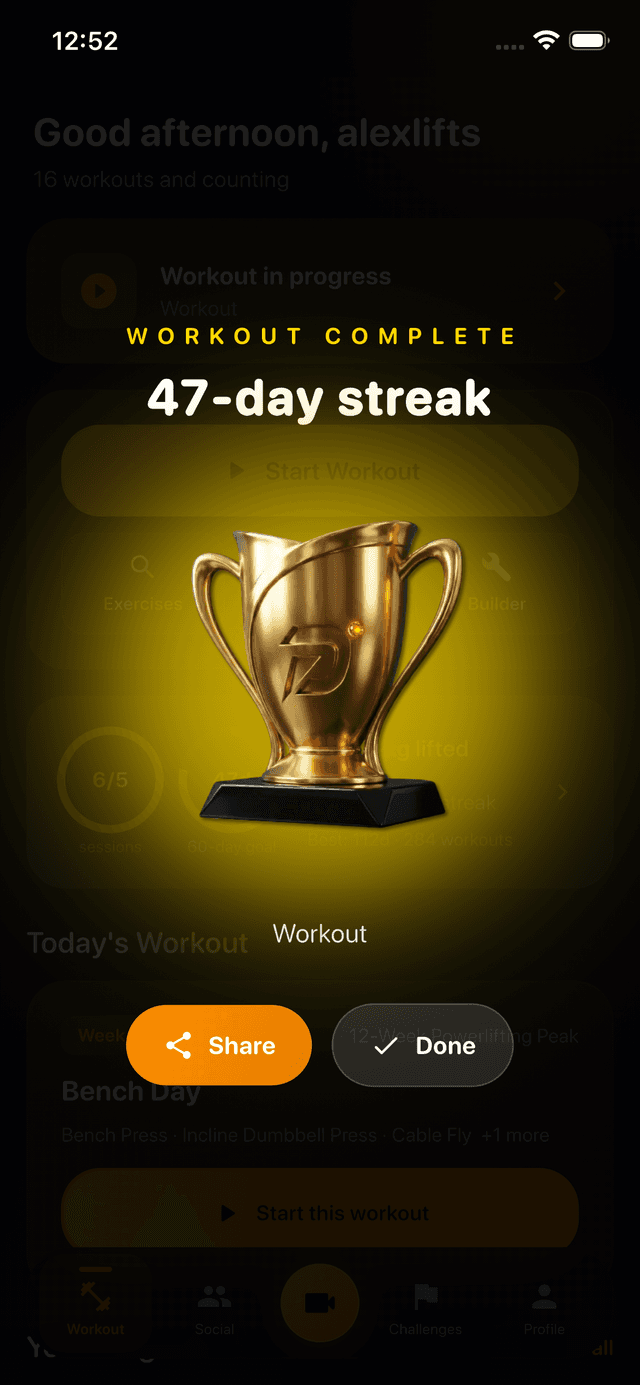
Track this directly in DilFit
DilFit makes logging workout records, monitoring strength metrics, sharing progressive routines, and training alongside partners effortless. Beautiful layouts, custom graphs and full social tracking at your fingertips.
Get App for FreeMost fitness goals don't fail from lack of effort — they fail at the design stage. "Lose 20 pounds" and "get shredded by summer" share the same two flaws: they describe an outcome you don't directly control, on a timeline your body didn't agree to. When week three doesn't look like the goal demands, the gap reads as personal failure, and the whole project quietly ends.
The fix isn't lowering your ambition. It's aiming the ambition at things you control, calibrated to rates of progress that are actually possible.
Know the realistic rates
Sustainable fat loss runs about 0.5–1% of bodyweight per week — for most people, 1–2 lb. Muscle gain is slower than anyone wants to hear: a newer lifter might add 1–2 lb of muscle per month, and the rate falls from there. Strength moves fastest, especially early, when weekly jumps on the bar are normal. Set targets outside these ranges and you're not being ambitious — you're scheduling a disappointment. (For calorie targets matched to your goal, our TDEE calculator at dilfitness.com/tools/tdee-calculator does the math.)
Build the goal in three layers
1. Identity: decide what you're becoming, not just what you want. "I'm someone who trains four times a week" survives bad weeks; "lose 20 lb" doesn't.
2. Process: set targets you fully control — sessions per week, protein per day, sets logged. These are the only goals you can actually hit on purpose.
3. Outcome: keep the scale or strength target, but demote it to a progress signal you check monthly, not a daily verdict.
Set a floor, not just a ceiling
Every plan needs a minimum viable workout: the version you do when everything goes wrong. Fifteen minutes, one compound lift, done. It sounds trivial, but it protects the streak — and the streak protects the identity. Missing a workout entirely costs you twice: the session, and the story you tell yourself about being someone who trains.
Make it visible, make it social
A goal tracked in your head renegotiates itself. A goal in a training log doesn't — the numbers from last week sit there, unimpressed by your excuses. And a goal your friends can see is stronger still: public commitment is one of the most reliable adherence tools in behavioral research. This is why DilFit pairs the log with a feed and challenges — when your training crew sees your week, the fourth workout stops being optional. Set the target, log every session, and let the people around you make quitting expensive.
The 12-week rule
Review at twelve weeks, not two. Twelve weeks is long enough for real change in strength, visible change in the mirror, and — most importantly — for the process goals to harden into habits. Hit the review date, compare your log to week one, and set the next block. That's the whole system: realistic rates, controllable targets, a visible log, people watching, twelve weeks at a time.